Coaching Templates That Cover the First 90 Days (Matched to Each Client Stage)
Coaching templates for a new solo coach: the 6 client stages, the document each stage needs, and a 90-day order so nothing is missing when a client says yes.
By Life Coaching Kit by Cosmo Suite · Editorial policy
Published · 8 min read
Your first client just said yes on a discovery call. Within the hour they'll expect something to sign, something to fill in, and a date for session one.
That's when you go looking for coaching templates. The search turns up galleries of pretty pages, sorted by color, in no useful order. You end up with a logo, three Instagram posts and no intake form.
The fix is to collect templates in the order a client meets them. A practice has six client stages, and each one needs only one or two documents. Get those right before you spend an evening on logos. If you'd rather not build them from scratch, a coaching template kit grouped by client stage follows the same order.
Key takeaways:
- A solo practice runs on six client stages, and each stage needs one main document.
- Four templates come first: the agreement, intake form, session plan and session notes.
- Three clients on a 12-week package already create 87 documents, so a system beats a gallery.
- Write the documents as files you own. Then a later move to a coaching platform costs you nothing.
The Paperwork Comes Before the Platform
Coaching templates are ready-made documents you edit for each client: agreements, intake forms, session pages, worksheets and closing packs. For a coach with 0 to 10 clients, they matter more than software. Every client relationship runs on the same paper trail: an agreement, an intake, a plan for each session, a record of it, homework and a way to close.
The ICF Code of Ethics is the conduct standard of the International Coaching Federation. Its Code of Ethics asks coaches to agree on "roles, responsibilities, confidentiality, financial arrangements, and other aspects of the coaching engagement" before coaching begins. No app writes that for you, so you write it down once.
Coaching platforms such as Paperbell and Practice Better are good at booking, payments and client portals. However, they still ask you to write the agreement, the intake questions and the session structure yourself, inside their forms.
So the order that works is paperwork first, platform later. Write the documents once, as files you own. As a result, a move to a platform at client 15 means pasting them in.
Coaching Templates: What to Use When
Each client stage needs one main document. Here is the map.
| Client stage | When it happens | Main template | Use it when |
|---|---|---|---|
| 1. Yes | Day 0, after the discovery call | Coaching agreement | Before any money or session |
| 2. Intake | Days 1-3 | Intake form + welcome packet | Before session one |
| 3. Sessions | Weeks 1-12 | Session plan + session notes | Every session |
| 4. Between sessions | Weeks 1-12 | Worksheets + workbook pages | Homework and reflection |
| 5. Review | Mid-point, about week 6 | Progress review form | Checking the goal still fits |
| 6. Close | Final week | Offboarding pack + feedback form | Ending well, asking for a referral |
Stages 1 to 3 are the ones you can't skip. Stages 4 to 6 make the work stick and bring the next client. That said, a new coach can add them during the first month.
How Much Paperwork Three Clients Create: A Worked Example
[Unique insight] Templates pay off because of volume: even a small practice produces a lot of documents.
For example, take a former HR manager who starts career-change coaching in the evenings. She has three clients, each on a 12-week package with one session a week.
| Document | Per client | 3 clients |
|---|---|---|
| Coaching agreement | 1 | 3 |
| Intake form | 1 | 3 |
| Welcome packet | 1 | 3 |
| Session plans | 12 | 36 |
| Session notes | 12 | 36 |
| Progress review | 1 | 3 |
| Closing page | 1 | 3 |
| Total | 29 | 87 |
That's 87 documents before you count worksheets. In particular, the 72 session plans and notes are where a blank page costs you most, because you face it twice a week per client.
A client portal can wait. What she needs is one version of each document, copied into one folder per client.
The Six Stages, Template by Template
The six templates are the coaching agreement, intake form, welcome packet, session plan and notes, worksheets and workbooks, and the offboarding pack. Each one below comes with what goes in it and when to reach for it.
Coaching Agreement: The One Document to Get Right First
A coaching agreement is the signed document that sets the terms of the work. It covers the number and length of sessions, fees, payment dates, cancellation and rescheduling, confidentiality and its limits, and how either side can end the work. The ICF Code (standard 1.2) asks coaches to respect both parties' right to end the relationship, so put the notice terms in writing.
In particular, coaching isn't therapy, and the agreement is where you say so. One line that names what coaching is not, and when you'd refer a client on, protects both of you.
Use it when: a client says yes, before the first invoice. Our coaching agreement template guide goes clause by clause.
Intake Form: Ask What Changes Session One
An intake form should hold 12 to 20 questions, not 40. Ask for contact details, the goal in the client's words and what they've tried. Then ask what success looks like in 12 weeks, how they like feedback, and anything you must know to keep the work safe.
In other words, drop any question whose answer wouldn't change how you run session one.
Use it when: the agreement is signed, and at least two days before the first session, so you have time to read it.
Welcome Packet: Answer the Questions Before They Ask
A welcome packet covers how sessions work, how to book and reschedule, what to prepare, how to reach you between sessions and what happens at the end. As a result, it saves you writing the same email to every client.
Use it when: within an hour of the first payment. The client gets answers while the purchase is still fresh.
Session Plan and Notes: Two Pages Per Session
Plan the hour before it starts and record it after. For instance, a plan for session 3 with a career-change client might read: 10 minutes check-in, 35 minutes on the CV story, 15 minutes action plan. The notes page records the client's words, the commitments made and the homework set.
Over a 12-session package that's 24 pages per client, so keep them in one place.
Use it when: before and after every session. Store notes securely. The ICF Code (standard 2.4) asks coaches to keep records in a way that "promotes confidentiality, security, and privacy".
Worksheets and Workbooks: Homework That Gets Done
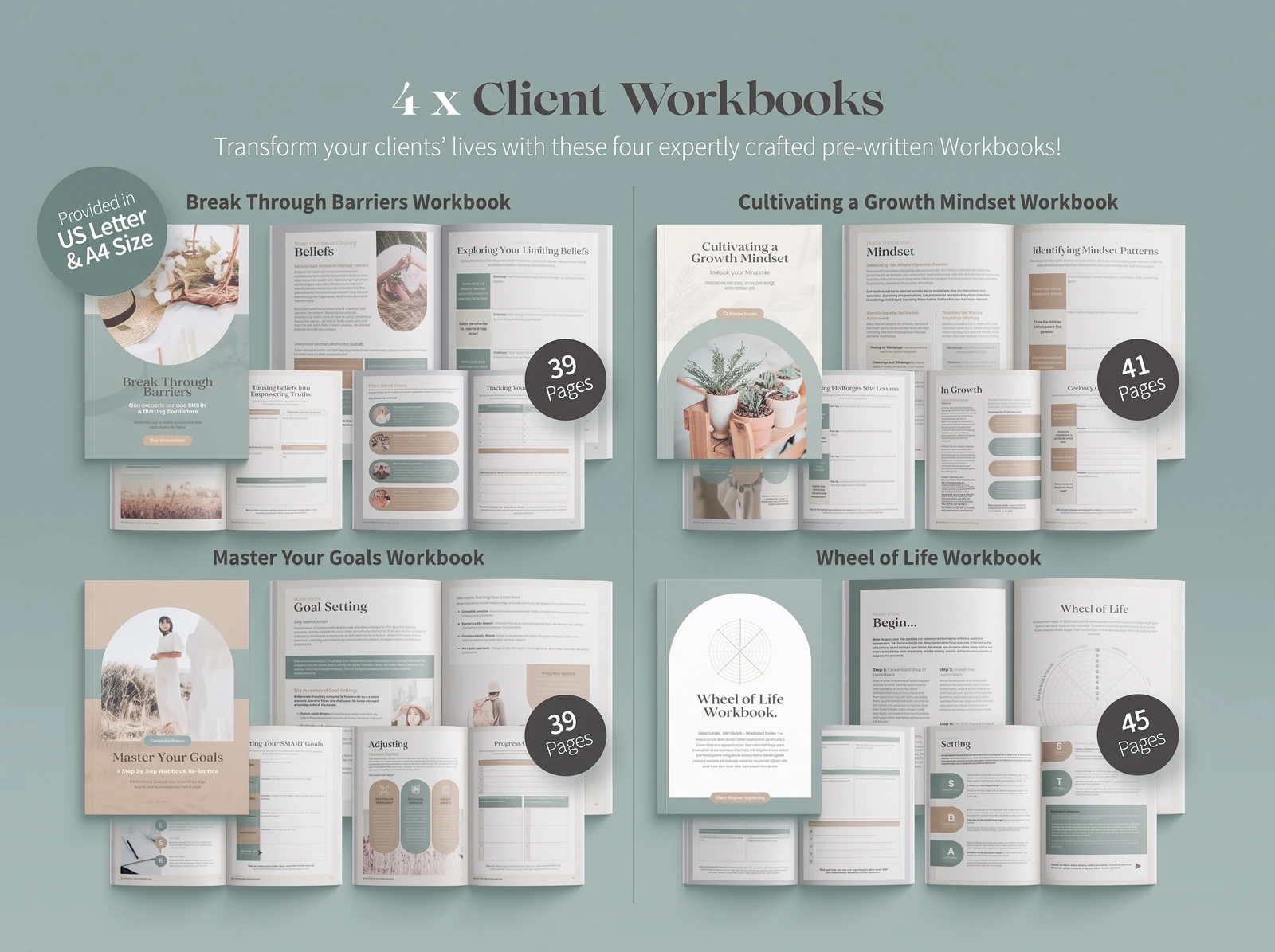
Worksheets turn a session insight into work the client does alone: a wheel of life, a values list, a SMART goal page, a limiting-beliefs exercise. A SMART goal is one that is specific, measurable, achievable, relevant and time-bound, the definition used in SUNY Schenectady's SMART goals guide. One worksheet per session is plenty. Workbooks bundle several into a multi-week theme.
Use it when: the session ends with a commitment the client must think through on paper.
Offboarding Pack: Close It Like You Opened It
The last session deserves a page: what the client achieved, what they'll keep doing, a feedback form and a referral request. In fact, a clear ending is also a natural moment to ask a happy client for a referral.
Use it when: the final session is booked, so the pack is ready to send the same day.
A 90-Day Setup Plan
Set up the agreement, intake form and session pages in the first weekend. Add the welcome packet and worksheets by day 14, a review form by day 45 and the offboarding pages by day 90.
| Days | Set up | Why now |
|---|---|---|
| 1-2 (one weekend) | Agreement, intake form, session plan, session notes | You cannot start a client without them |
| 3-14 | Welcome packet, 5 worksheets for your niche | Your first clients are in early sessions |
| 15-45 | Progress review form, one workbook | Clients reach the mid-point |
| 46-90 | Offboarding pack, feedback form, referral request | The first packages end |
Branding and social posts sit outside this table on purpose. A logo helps you look ready. However, a missing intake form costs you a session.
The Part Most Template Galleries Leave Out
Galleries rarely cover five things: one look across every document, your own words, short forms, a folder per client, and a legal review of the agreement.
One look across every document. A client sees your agreement, packet, worksheets and offboarding pages. Use the same fonts, the same three colors and the same logo, and the set reads as one practice. Starting from client forms and onboarding packs that already share one design saves you matching them by hand.
Your own words. Replace every sample sentence with how you actually talk. A client can tell when a welcome letter was written for somebody else.
Fewer questions, better answers. For instance, long forms get skipped. Cut each form to what you'll act on.
A folder per client. Keep the agreement, intake, notes, worksheets and closing page together. When a client comes back a year later, their history is in one place.
Have the agreement reviewed. That said, templates are only a starting point. The ICF's case study on Standard 1.1 notes that "a well-defined coaching agreement should cover confidentiality, boundaries, and expectations and should be revisited when circumstances change". Have yours reviewed for where you practice.
Where the Life Coaching Kit Fits
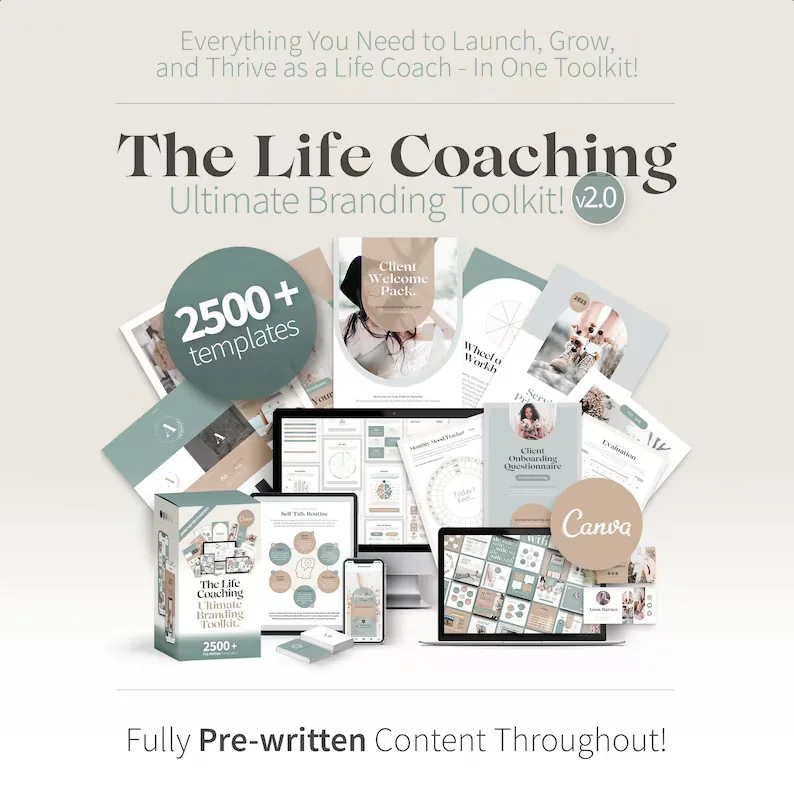
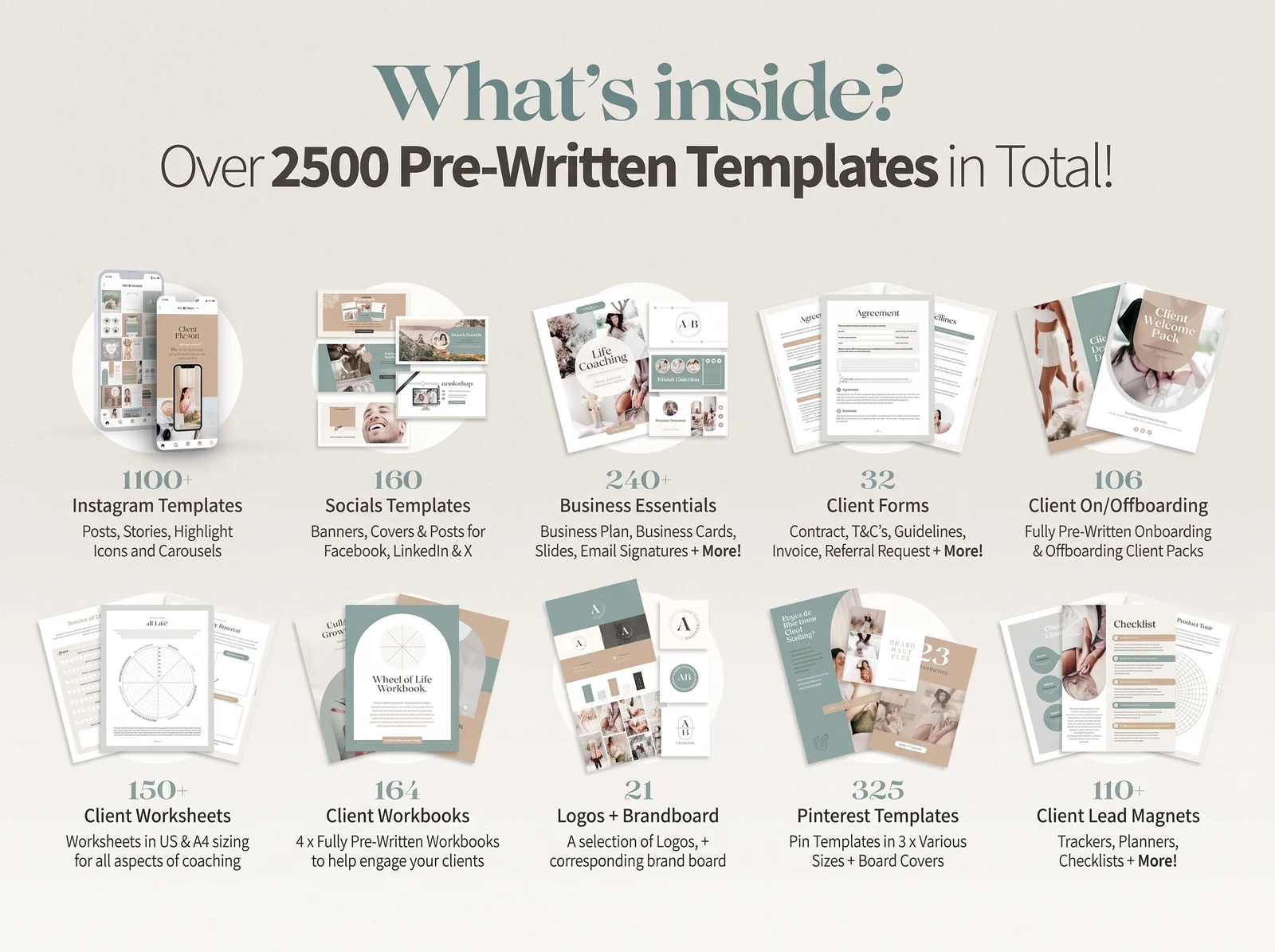
The Life Coaching Kit covers every stage above in one set: 2,500+ Canva templates grouped the way a practice runs.
[Original data] Here is what the kit holds for each client stage, counted from its contents page:
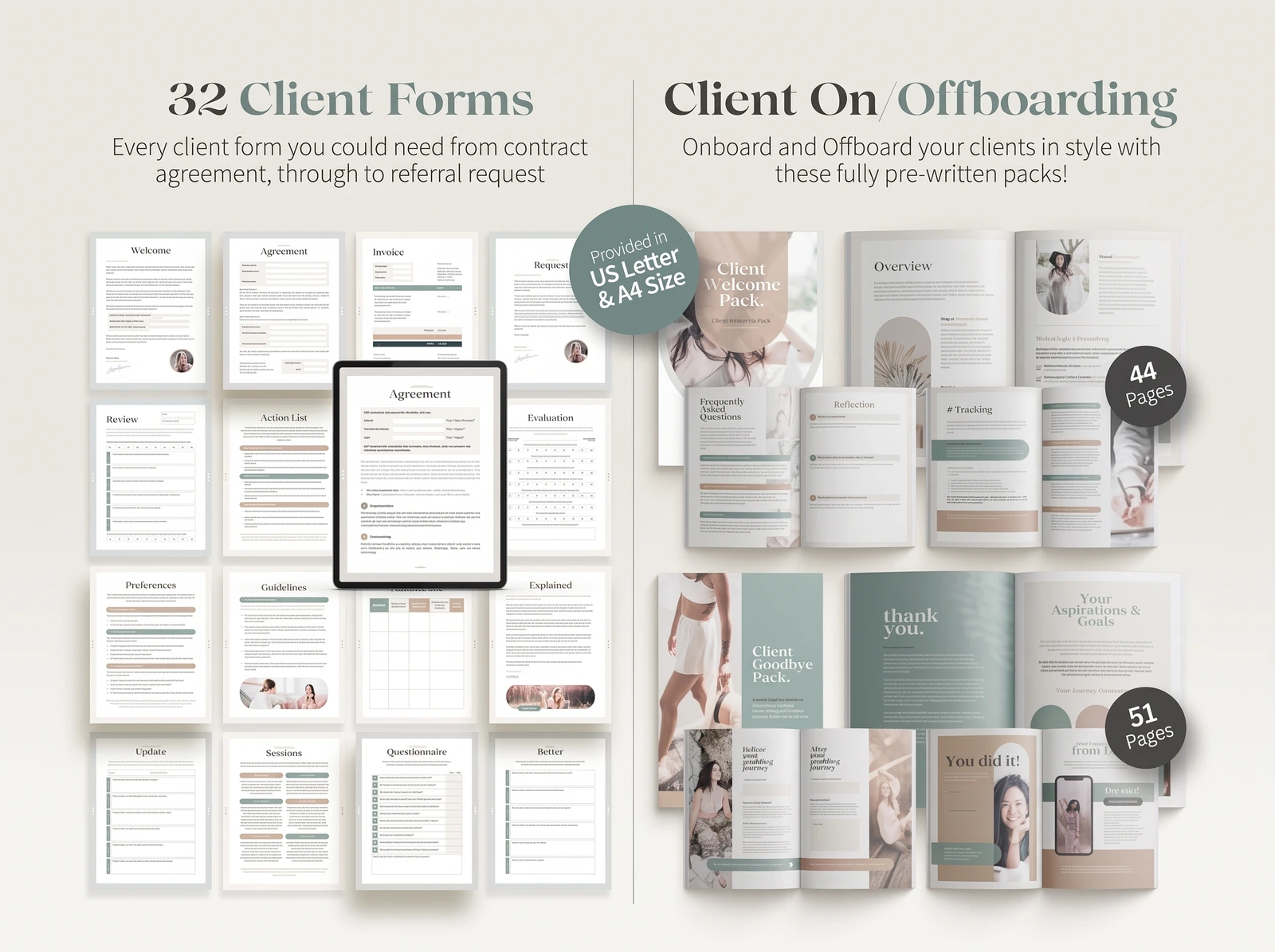
- Yes and intake: 32 client forms, including the agreement, intake, evaluation, session and review pages, in US Letter and A4.
- Welcome: a 44-page client welcome pack.
- Between sessions: 150+ worksheets and four pre-written workbooks.
- Close: a 51-page client goodbye pack and a referral request form.
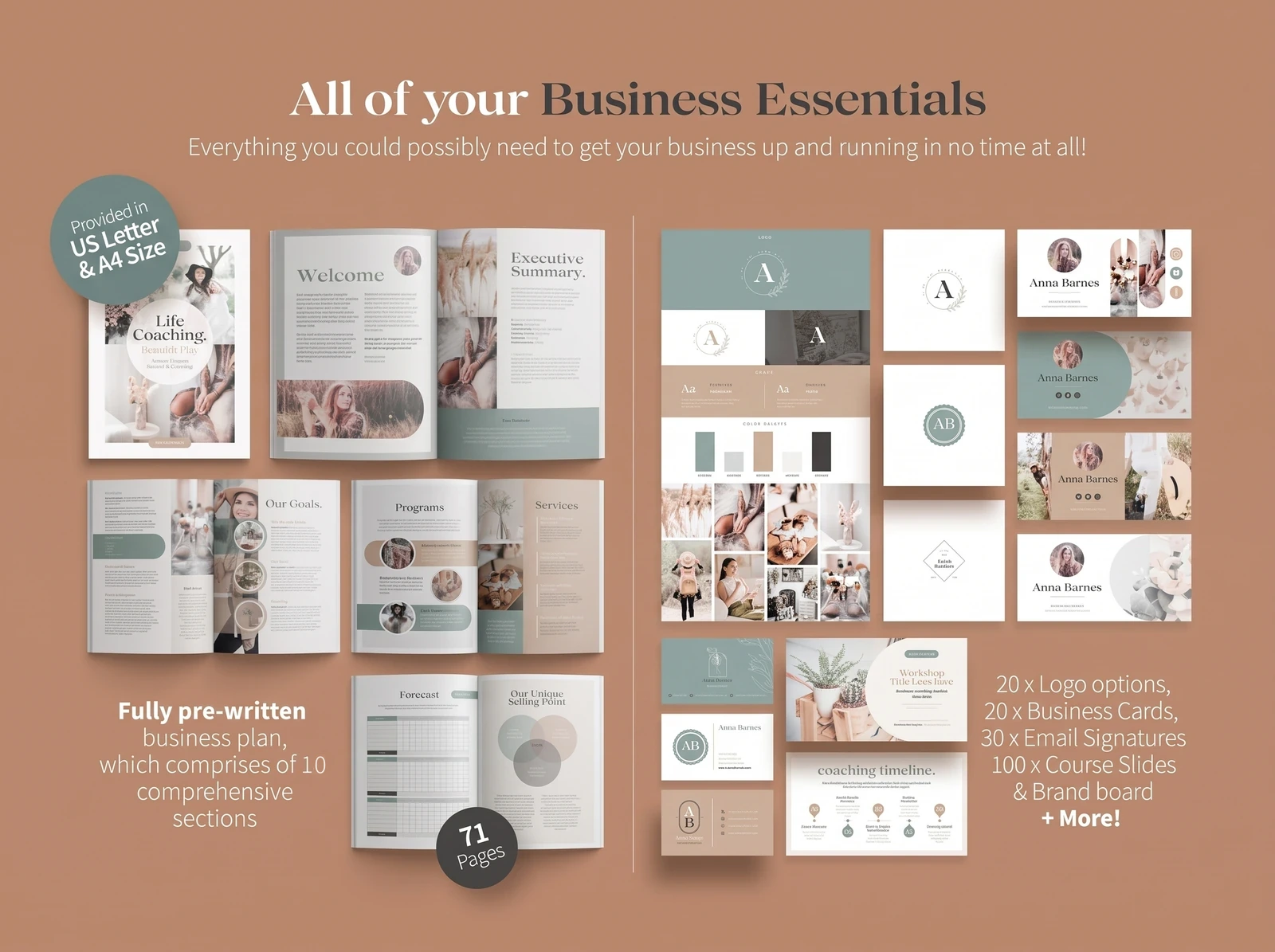
- Business side: logos and a brand board, business cards, email signatures, a 71-page business plan, social media templates and 110+ lead magnets.
Everything opens in Canva, free account included, and you change the text, colors and logo to make it yours. You keep the files, so the documents come with you if you move to a coaching platform later.
How we put this together. We are the Cosmo Suite team that sells the Life Coaching Kit. Our methodology: the stage map and the 90-day plan are our own, built from the ICF Code of Ethics and the 6 stages a 12-week package passes through. The ethics quotes come from the ICF's pages, checked on 3 October 2026. You can read about us and the company behind this site and our editorial policy, or use the contact page with questions. None of this is legal advice, so check your agreement with a lawyer where you practice.
You can see the client forms, welcome and goodbye packs, and workbooks before you decide.
Frequently asked questions
Which coaching templates do I need before my first client?
Four: a coaching agreement, an intake form, a session plan and a session notes page. They cover the day a client says yes through the end of session one. The welcome packet, worksheets and offboarding pack can follow in the first month, while the client is in early sessions.
Are coaching templates enough, or do I need coaching software?
It depends on how many clients you have. With 0 to 10 clients, templates plus free tools (a calendar link, a payment link, a shared folder) usually cover the work. Once booking, reminders and payments take more than an hour a week, a platform starts to earn its monthly fee.
Can I use coaching templates in Canva with a free account?
Yes. Canva templates shared as links open in a free account, and you can change the text, colors, fonts and logo. You can download the result as a PDF to send to clients or print. Some stock elements inside Canva may be paid, so check before you export.
Is a coaching agreement template legally binding?
Not on its own. A template gives you clauses and wording to start from; whether it holds up depends on your location and how you use it. Fill it in for your practice and have a lawyer where you work review it before your first paying client signs.
How long does it take to set up a full set of coaching templates?
Plan on one weekend for the first four documents if you start from templates. The agreement and intake form take the longest. The welcome packet, worksheets and offboarding pages can follow over the next four weeks.
What is the fastest way to get every coaching template in one place?
Start from a kit that groups templates by client stage, so you edit instead of design. The Life Coaching Kit has 32 client forms, a 44-page welcome pack, a 51-page goodbye pack and 150+ worksheets in Canva, all editable with your logo and colors.