A Client Welcome Packet That Answers the First Questions Before Session 1
Client welcome packet: the 7 pages to include, the order clients ask their questions in, what to keep out, and a worked example of the first hour.
By Life Coaching Kit by Cosmo Suite · Editorial policy
Published · 9 min read
Your client paid an hour ago. They are now looking at an empty inbox and wondering what happens next, when the first session is, and whether to prepare anything.
Most coaches answer those questions one email at a time, over the next two weeks. Each answer is fine on its own. Together they feel scattered, and the client is guessing during the days they decide whether they chose well.
A welcome packet fixes that by answering the questions in the order clients ask them. Below is a seven-page packet, what to keep out of it, and what the first hour after payment looks like. If you would rather edit than design, a ready-made client welcome pack in Canva is a starting point.
Key takeaways:
- A client welcome packet works at seven short pages, ordered by the questions a new client asks.
- Send it within an hour of payment, with the intake form and agreement as separate attachments.
- Keep the contract, the full price list and your life story out of it.
- Use one voice and one design across the packet, the agreement and the intake form.
The Short Answer: Seven Pages, Sent Within an Hour
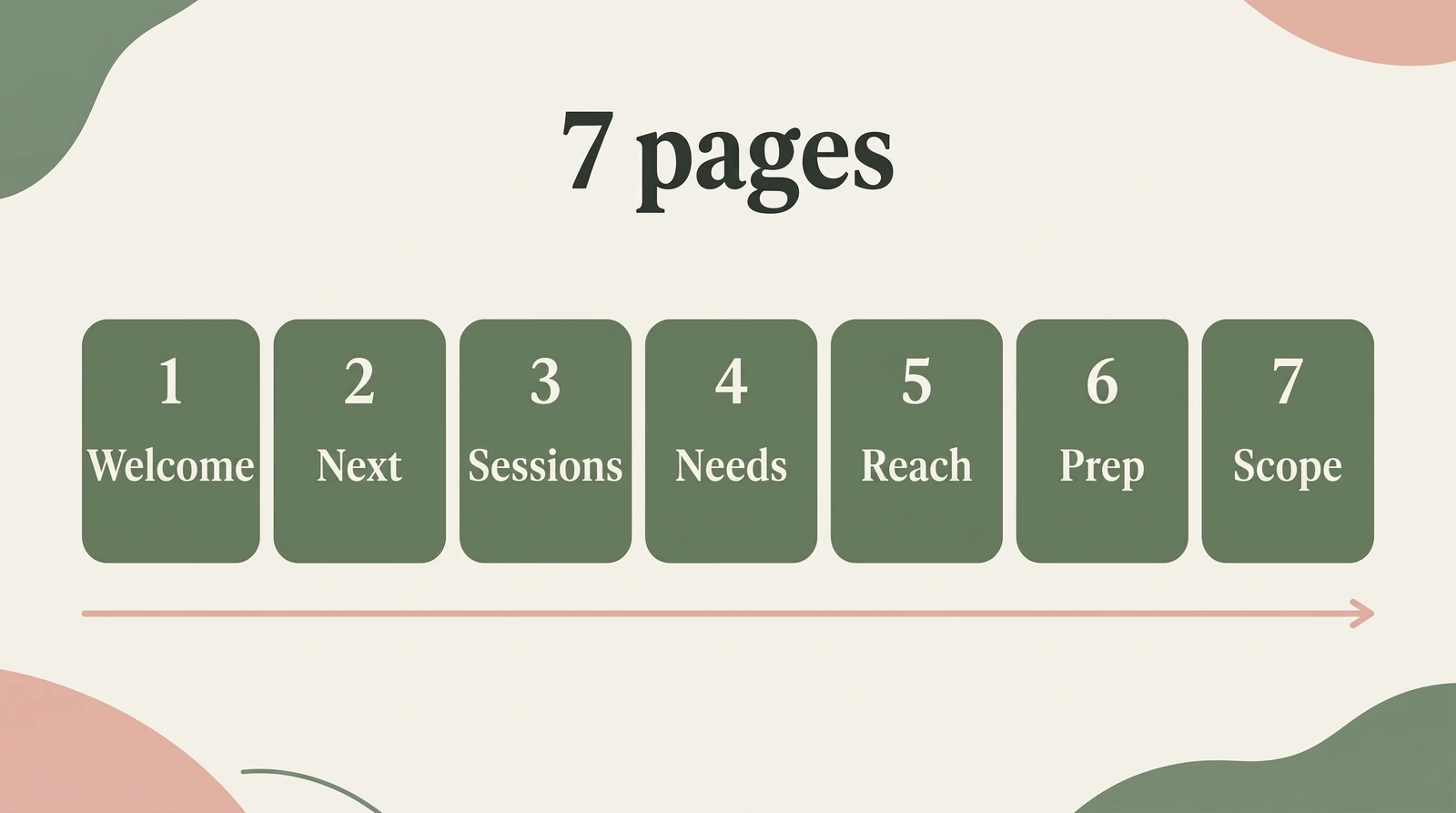
A client welcome packet is seven short pages, sent within an hour of payment. They are a welcome letter, what happens next, how sessions run, what you need from the client, how to reach you, first-session prep, and a scope line. Each page answers one question the client has before session one.
A client welcome packet is the short pack you send after a client says yes and pays, so they know what happens next without asking. It is different from the coaching agreement, which they sign, and from the intake form, which they fill in.
The order follows the relationship. The ICF Code of Ethics Standard 1.1 asks coaches to explain "the nature of coaching" and co-create a coaching agreement "before coaching begins". The agreement comes first, then payment, then the packet that makes the next two weeks easy to follow.
[Original data] We read the three guides that rank for this keyword on 7 October 2026. The Coaching Tools Company lists five core items and five optional ones, with the agreement inside the packet. Julia on Purpose lists nine sections, including the contract and a payment section. Coachway lists four core sections and three optional ones. None of them gives a page order, a send time or a list of what to leave out. That is what this guide adds.
Client Welcome Packet: What to Use When
Four formats cover most solo practices: a welcome email only, a seven-page packet, a full pack with extras, or a welcome message inside a platform. For a new coach with 0 to 10 clients, the seven-page packet is usually the right choice.
| Format | Length | Use it when | Skip it when |
|---|---|---|---|
| Welcome email only | 1 page | One-off sessions or a short trial | The client has paid for a package |
| Seven-page packet | 7 pages | A new coach with a few package clients | You have a long program with weekly lessons |
| Full pack with extras | 15+ pages | A program with workbooks and a gift | You are still working out your own process |
| Platform welcome message | 1 message | A platform sends it for you | You have not written the pages yet |
The seven-page packet wins because it asks the least of the client and of you. However, a longer pack can come later, once real clients show you what they asked.
The Seven Pages, in the Order a Client Asks
The seven pages follow one thread: who you are, what happens, how it works, what to do, how to reach you, how to prepare, and where coaching ends. A client who reads them in order has nothing left to email you about before session one.
Welcome Letter: Say Hello, Say What Happens
The welcome letter is one page that thanks the client, names the first session date and says what is in the packet. Keep it under 150 words and write it in your own voice. Also, this is the page that sets the tone, so avoid a stiff template greeting.
Use it when: always, and put the first session date in the first two sentences.
What Happens Next: A Short Timeline
This page lists the next steps as dated items: today, in two days and at session one. It answers "what do I do now?" in one glance, and it stops the "did my payment go through?" email.
Use it when: always. A three-line list with dates beats a paragraph.
How Sessions Run: Length, Place, Rules
This page states the session length, where you meet, how to reschedule and what the cancellation window is. Repeat the key rule from the coaching agreement in one line and link to it for the rest. Instead of copying the clause, point to it.
Use it when: the client booked a package, because the rules apply to every session after the first.
What I Need From You: Three Items
This page tells the client what to return before session one: the signed agreement if it is not signed yet, the completed intake form, and any payment still due. Name the intake form's deadline, and keep the form itself short.
Use it when: you send the intake form separately, which is the cleaner choice.
How to Reach Me: One Channel and a Reply Time
This page names one channel (email or a messaging app), the days you reply and what counts as urgent. Coaching has no emergencies you can solve by text, so say plainly that it is not a crisis line.
Use it when: always. A stated reply time removes the silence clients read as a problem.
First-Session Prep: Two or Three Questions
This page gives the client two or three questions to think about before session one, such as what they want different in three months. Keep it short enough to do on a phone. A longer worksheet belongs after session one.
Use it when: the first session is about the goal. Skip it if your intake form already asks the same questions.
Scope: What Coaching Is and Is Not
This page is a short paragraph: coaching is a partnership on goals, it is not therapy, and you may suggest another professional if that fits better. ICF Standard 4.3 asks coaches to explore "the potential for a different coach, professional, or resource" when the value shifts.
Use it when: always, and say the same thing in the agreement. Have your wording reviewed where you practice.
What to Keep Out of the Packet
A welcome packet is a guide, not a binder, so leave out anything that is its own document or does not help in the first two weeks. The agreement, intake form, price menu, long biography and extra worksheets all have a better home.
| Leave out | Why | Where it belongs |
|---|---|---|
| The full agreement | A signed document should stand alone | Its own PDF, linked from page 3 |
| The intake form | The client fills it in, not reads it | A separate form, linked from page 4 |
| Your full price menu | The client already chose | Your sales page |
| A long biography | They know who you are | A short line in the letter |
| Ten worksheets | Too much before session one | Homework after session one |
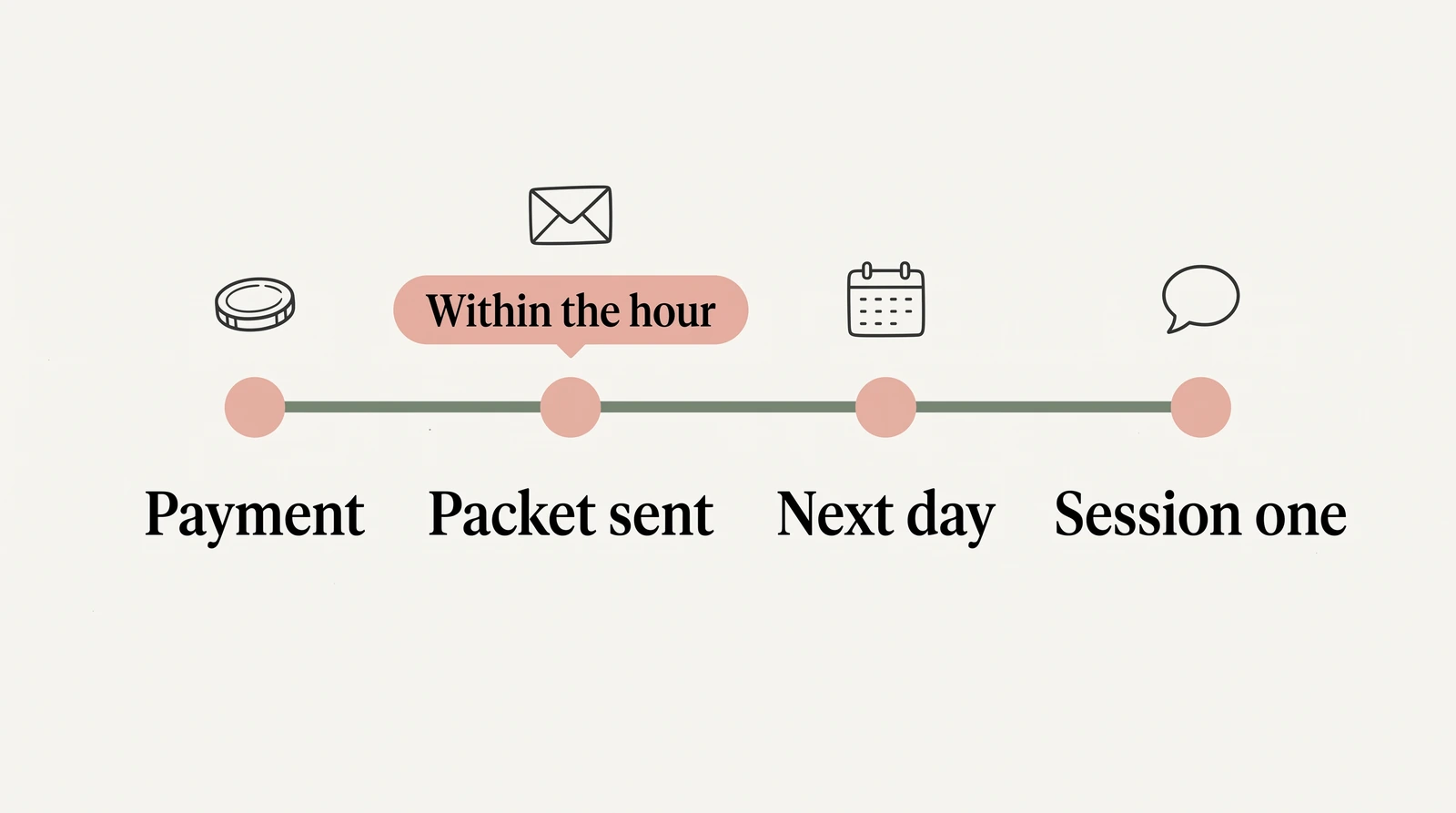
Worked Example: The Hour After a Client Pays
Take a former HR manager with three clients who coaches in the evenings. A new client pays on a Tuesday night, and she sends the packet before bed.
- Email: a three-line message says which file to open first.
- Packet: seven pages, with the first session date on page one.
- Attachments: the agreement (already signed) and the intake form, as separate files.
- Next day: the client replies to confirm and asks nothing else.
Assume the pages were written once, so sending one takes her about ten minutes to fill in a name and a date. The first session can start with the goal.
The Part Most Guides Leave Out
Whether the packet works depends on how you send it and keep it up to date. Six habits matter.
Send it fast. For example, Coachway's guide says the first 30 days are when most clients quietly leave, and names not knowing what happens next as a common cause. A packet in the first hour answers that cause.
Use one voice. The welcome letter, the agreement and the intake form should sound like the same person. A friendly letter followed by a stiff contract makes the client wonder which one is you.
Match the look. A client sees the packet, the agreement, the intake form and an invoice within a day. Mismatched fonts and colors make a practice look pieced together. Our stage-by-stage list of coaching forms shows where each sits, and the agreement is the document the packet points to.
[Unique insight] Keep a question log. After each of your first three clients, write down every question they ask that the packet did not answer, then add one line to the right page. By client four, the packet answers what your clients actually ask, not what a template guessed.
Say what happens to their details. Tell the client where their answers and files are kept and for how long. The UK regulator's storage limitation guidance says: "You must not keep personal data for longer than you need it." US guidance agrees. The FTC's guide to protecting personal information says, "If you don't have a legitimate business need for sensitive personally identifying information, don't keep it." Therefore one line on the "How to Reach Me" page is enough. Check what applies where you and your client live.
Repeat the scope line. Say the coaching-is-not-therapy sentence in the packet and the agreement. ICF Standard 2.2 asks for "a clear agreement about what information is exchanged and how it is exchanged", and the packet is where a client first reads how you work.
Where the Life Coaching Kit Fits
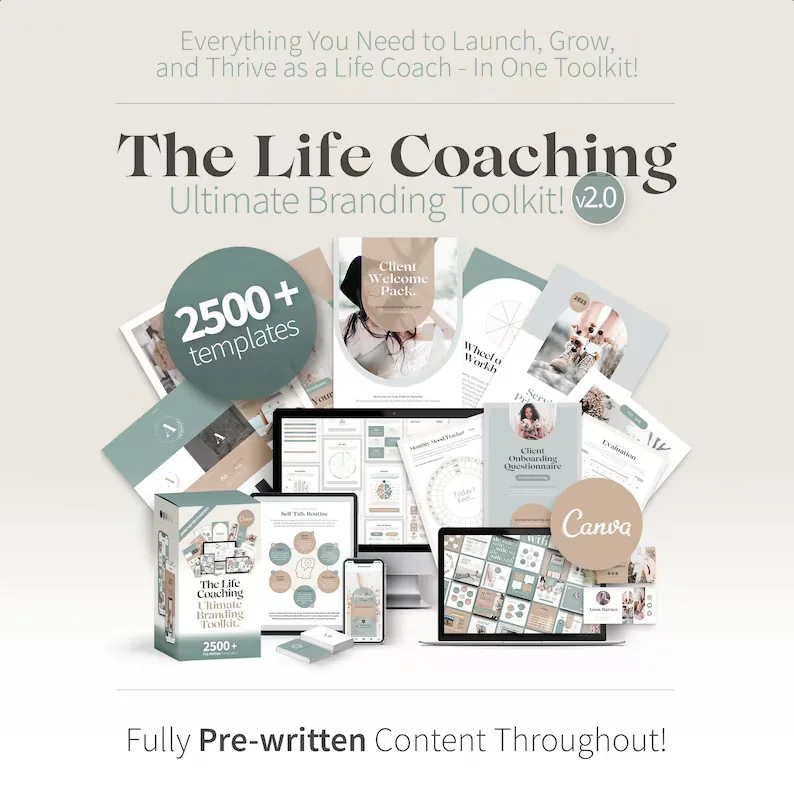
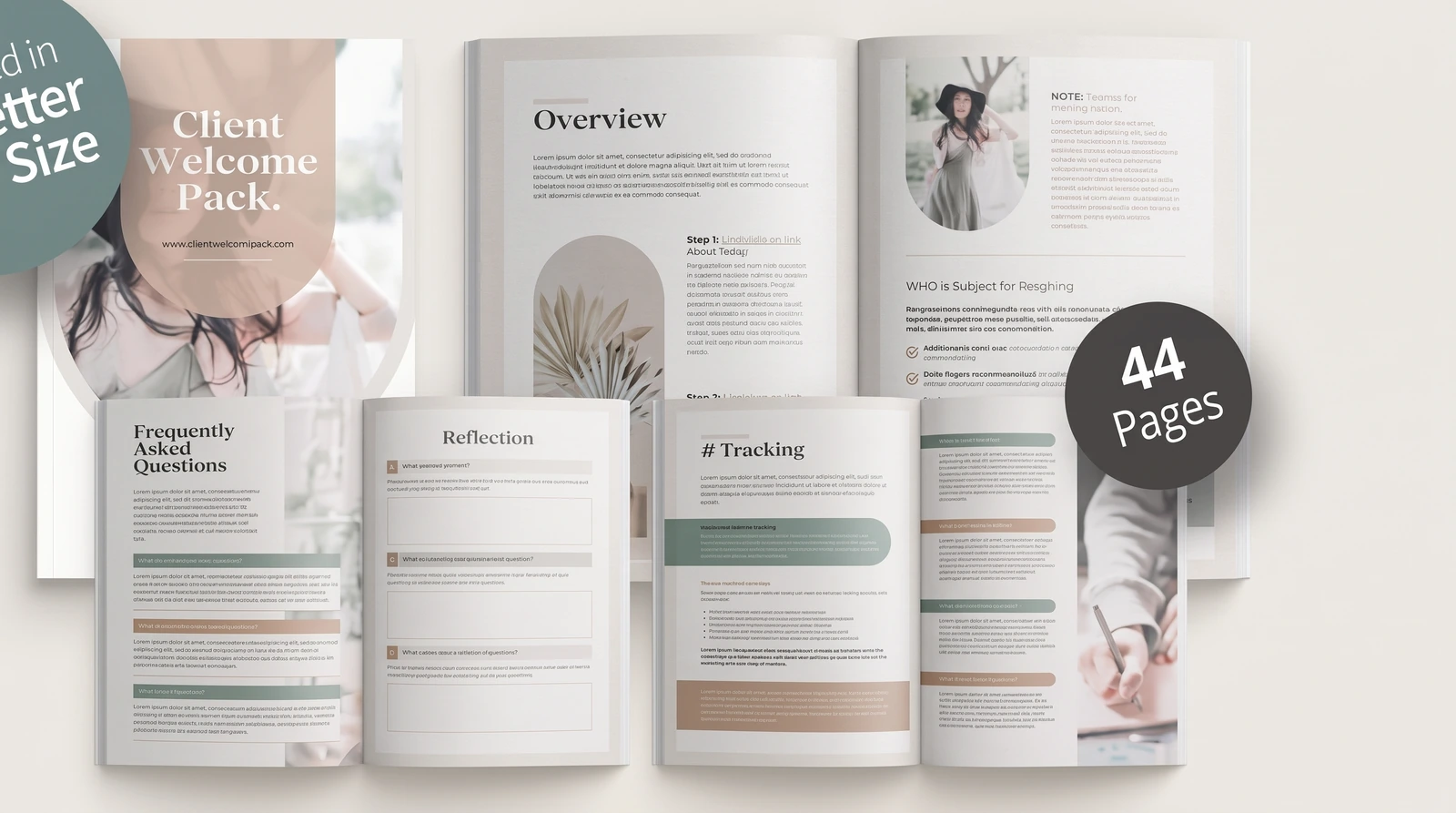
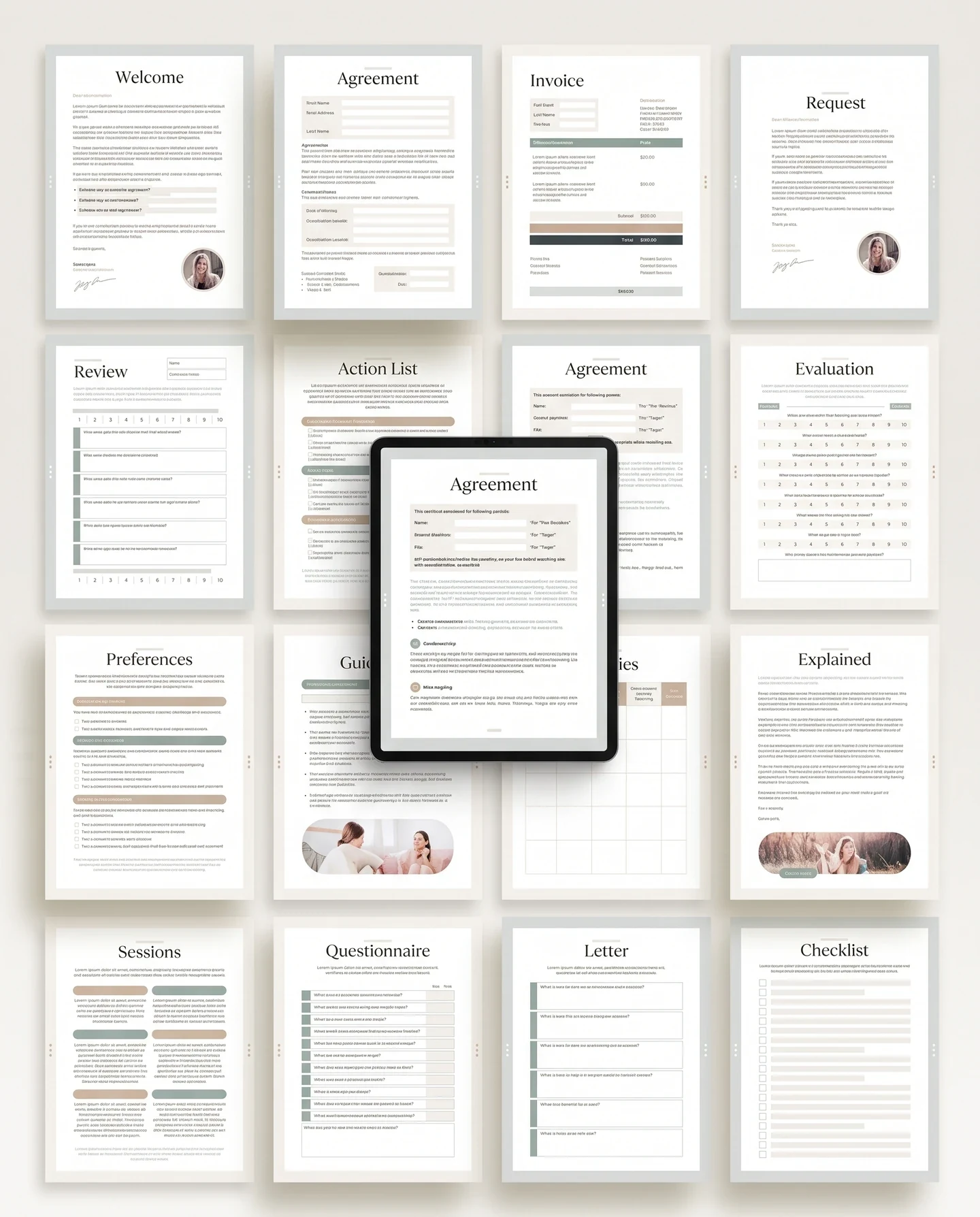
The Life Coaching Kit gives you the packet pages in Canva, so you edit the seven pages instead of designing a layout. Its contents include a 44-page client welcome pack, a client onboarding questionnaire and a coaching agreement, in the same design. You add your wording, logo and colors. Our guide to the first 90 days of coaching templates shows where the packet sits in the larger set.
What is in the kit for this step, from its contents page:
- Client onboarding: a client welcome pack, a client onboarding questionnaire and intake forms.
- Contractual forms: a coaching agreement to send alongside the packet.
- Offboarding: a client offboarding pack for the other end of the relationship.
- Editable in Canva: free or Pro, with your logo and colors.
It is not booking or client portal software, and the seven pages above are our own, not the kit's wording. If you later move to a coaching platform, you paste your own pages into its welcome message. Have your documents reviewed where you practice.
How we put this together. We are the Cosmo Suite team that sells the Life Coaching Kit. The seven-page order, the keep-out list and the worked example are our own analysis of a solo practice. The three guides we compared and the ICF quotes were checked on 7 October 2026. Read about us and the company behind this site and our editorial policy. None of this is legal advice.
See the client welcome pack and onboarding forms before you decide.
Frequently asked questions
How long should a client welcome packet be?
Seven short pages is enough for most solo coaches, and a client can read it in about ten minutes. Add a page only when a real client asks a question the packet does not answer. If a page repeats the agreement, cut it and link to the agreement instead.
When should I send a client welcome packet?
Within an hour of the client paying, while the yes is still fresh. Send it with a short email that says what to open first. The intake form and the signed agreement can travel in the same email, but keep them as separate documents.
Should the coaching agreement be inside the welcome packet?
No. Some guides put the contract inside the packet, but a signed agreement should be its own document so you can find it later. ICF Standard 1.1 asks for an agreement co-created before coaching begins. Link to it from the packet and repeat only the key rules.
Do I need a welcome packet if I use a coaching platform?
Yes, a short one. A platform sends automatic emails, but it does not know how you run a session or what you want a client to do first. Paste your seven pages into its welcome message or resource area, in the same order.
Can I use the same welcome packet for every client?
Yes, for the first ten clients. Change only the name and the first-session date, and keep a note of each question a client asks afterwards. Those questions tell you which page to add, and a niche packet makes sense once you serve one niche.
What is the fastest way to build a welcome packet?
Start from a packet that is already laid out, replace the placeholder words with yours, and add your logo and colors. The Life Coaching Kit includes a 44-page client welcome pack in Canva, so you edit pages instead of designing them.
Sources
- International Coaching Federation: ICF Code of Ethics
- The Coaching Tools Company: Client Coaching Welcome Packet
- Julia on Purpose: Coaching Client Welcome Packet
- UK Information Commissioner's Office: Principle (e) Storage limitation
- Federal Trade Commission: Protecting Personal Information, A Guide for Business
- Coachway: Welcome Packet template
Keep reading
Client Paperwork
Life Coaching Forms: What to Have Ready Before Your First Client Session
Coaching forms for a solo life coach: 11 in client order, 10 the client sees, the 5 to have ready before session one, and which to fold in or skip.
· 11 min read
Client Paperwork
How to Write a Life Coaching Intake Form (Without a 40-Question Wall)
Life coaching intake form: 15 questions in 5 groups, each tied to what it changes in session one, plus 8 questions to cut and a worked example.
· 10 min read
Client Paperwork
Free Coaching Agreement Template: 10 Clauses to Copy and Customize
Coaching agreement template in 10 clauses: what each one says, what it prevents and sample wording to adapt, plus the ICF ethics standards behind them.
· 9 min read