How to Write a Life Coaching Intake Form (Without a 40-Question Wall)
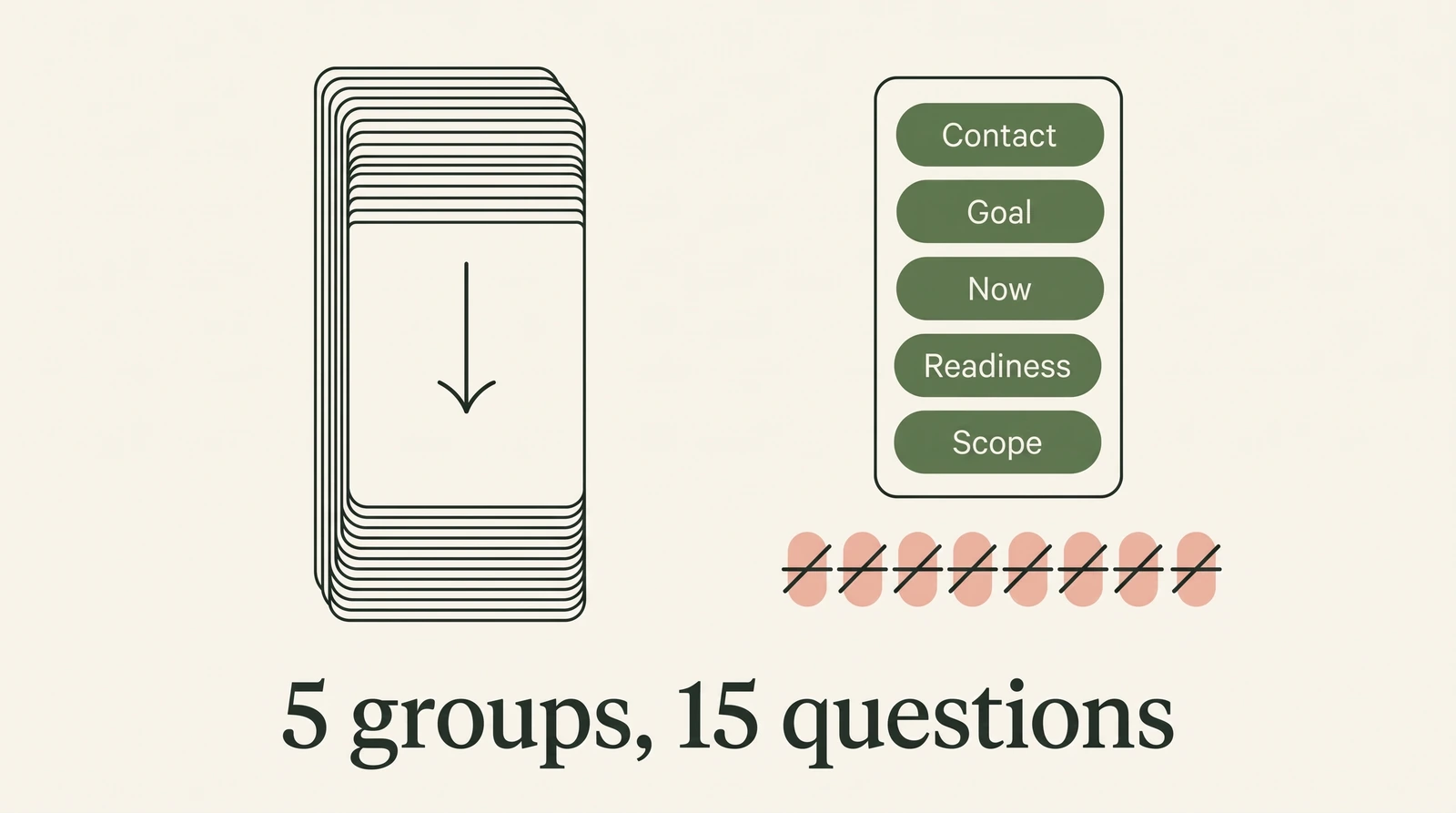
Life coaching intake form: 15 questions in 5 groups, each tied to what it changes in session one, plus 8 questions to cut and a worked example.
By Life Coaching Kit by Cosmo Suite · Editorial policy
Published · 10 min read
A client just said yes and signed. Now you open a blank page and type "intake form questions", and the first results hand you seven sections, five question categories and a list of niche add-ons.
Most of those questions are reasonable on their own. Stacked up, they make a wall. A client facing forty questions on a Sunday night skips half or leaves it until the morning of session one. Then you spend the first ten minutes asking what the form should have told you.
The fix is a smaller form, built around one test: would the answer change what you do in session one? Below are 15 questions that pass it, grouped by what each group changes, plus the questions to cut. If you would rather edit than design, a ready-made client onboarding questionnaire is a starting point.
Key takeaways:
- A life coaching intake form works at 15 questions or fewer, in five groups: contact, goal, context, readiness and scope.
- Keep a question only if the answer would change how you run session one.
- Send it with the signed agreement, at least two days before the first session.
- Store each form in one private folder with a deletion date, and never ask for medical or therapy history.
The Short Answer: 15 Questions in Five Groups
A good life coaching intake form has 15 questions or fewer, in five groups: contact details, the goal, current context, readiness, and scope. Each group changes something concrete in session one, such as the agenda, the pace or whether coaching fits. A client can finish it in one sitting.
A life coaching intake form is the questionnaire a client completes after saying yes and before session one, so you start the first call with their answers instead of an interview. It is different from the discovery call, which decides whether you work together at all.
The order matters. The ICF Code of Ethics Standard 1.1 asks coaches to co-create a coaching agreement "before coaching begins", covering confidentiality among other things. So the agreement comes first and the intake form follows it. Our guide to the coaching agreement, clause by clause covers the first step.
[Original data] We read the two intake form guides that sit in the top results for this keyword on 5 October 2026. Coactive's guide organizes its questions in seven sections, and Luisa Zhou's guide in five categories with extra sections for five niches. Neither one says which questions to drop if the form feels long, and neither ties a question to a decision you make in session one. That link is what this guide adds.
Life Coaching Intake Form: What to Use When
Four formats cover most solo practices: a short form, a long form, a booking page with two questions, and a live intake call. Pick by how many clients you have and how much you already learn on the discovery call. For most new coaches with 0 to 10 clients, the short form is the right one.
| Format | Length | Use it when | Skip it when |
|---|---|---|---|
| Short written form | 12-15 questions | You are a new coach with a few clients | You coach a niche with real risk factors and need more |
| Long written form | 25-40 questions | A sponsor or employer pays and wants detail | Clients pay themselves and you want them to finish |
| Booking page questions | 2-3 questions | Before the discovery call | They would repeat the intake form |
| Live intake call | 20-30 minutes | The client prefers talking to typing | You have no spare slot before session one |
Read the "skip it when" column first. The long form costs more: the client pays in time and you pay in attention. Start short, and add a question only when a real client shows you missed it.
The 15 Questions, Grouped by What They Change
The 15 questions fall into five groups. Each group exists because it changes one decision before or during session one: how you reach the client, what the agenda is, where you start, how you pace the work, and whether coaching is the right fit. Here is each group with its questions.
Contact and Schedule: Names, Time Zone, Best Times
These three questions change how you reach and schedule the client. Ask for the name they like to be called, the best email and phone, their time zone, and the days and times that work for sessions. Drop date of birth and home address unless you need them to invoice.
- What name do you like to be called?
- What is the best email, phone and time zone to reach you?
- Which days and times work best for sessions?
Use it when: always, because a client in another time zone is easy to book at the wrong hour.
The Goal: In Their Own Words
These three questions set the agenda for session one. Ask in the client's own words, because the way someone describes the goal tells you what they think the problem is. The third question gives you the success measure for your mid-package review.
- What do you want to be different in three months?
- Why now? What changed that made this the moment?
- When our work ends, what would tell you it worked?
Use it when: always. If you only keep three questions, keep these.
Where They Are Now: What They Have Tried
These three questions change your starting point, so you do not suggest what the client already did. Ask what they tried, what the situation looks like today in a few lines, and what keeps getting in the way.
- What have you already tried, and what happened?
- In a few lines, what does your current situation look like?
- What keeps getting in the way?
Use it when: the client is a career changer or has coached before. Their answer to question 7 saves you from repeating advice.
Readiness: Time, Feedback and Past Support
These three questions set the pace and the homework. A client with two free hours a week gets a different action list than one with ten. Ask about time, about how they like to hear hard feedback, and about what made earlier help work or not.
- How many hours a week can you give to actions between sessions?
- How do you like to hear feedback: direct, gentle or somewhere between?
- When you have had support before, what helped and what did not?
Use it when: the package runs eight sessions or more, because the pace you set carries across many weeks.
Scope and Safety: Is Coaching the Right Fit?
These three questions confirm that coaching fits, and they keep you inside it. Coaching is not therapy. Ask whether the client is working with a therapist or other professional on this goal, what you should know to keep the work safe, and anything else they want you to read first.
- Are you working with a therapist, doctor or other professional on this goal?
- Is there anything I should know to keep our work safe, or anything you would rather we did not cover?
- Anything else you want me to read before we meet?
ICF Standard 4.3 asks coaches to stay alert to a shift in the value of the relationship and to explore "the potential for a different coach, professional, or resource". Question 13 is where that starts. Never ask for a diagnosis or a history; ask only what you need.
Use it when: always, and write one sentence about referral in the agreement and in the welcome letter as well.
What to Cut: Eight Questions That Make the Form Longer
Eight common questions rarely change a decision in session one, so they cost more than they give. Date of birth, home address, full medical history, income, relationship history, childhood memories, a list of weaknesses and long personality tests can all wait. If one turns out to matter, you can ask in session.
| Question | Why it goes | Where it belongs instead |
|---|---|---|
| Date of birth | Rarely changes session one | Nowhere, unless you invoice with it |
| Home address | Invoice only | The invoice, only if you need it |
| Full medical history | Not coaching, and sensitive | Nowhere: refer out if needed |
| Income | Raises pressure before trust exists | A package conversation, if relevant |
| Relationship history | Long and personal | Session, if the client brings it |
| Childhood memories | Therapy territory | Nowhere |
| List your weaknesses | Gives an unhelpful frame | Question 9 asks what gets in the way |
| Long personality test | Doubles the form length | Optional homework after session one |
The same rule is in data protection law. The UK regulator's data minimisation guidance says personal data should be "adequate, relevant and limited to what is necessary", and that you should "hold that much information, but no more." US guidance says the same thing: the FTC's guide to protecting personal information tells businesses "Keep only what you need" and, "If you don't have a legitimate business need for sensitive personally identifying information, don't keep it." Check what applies where you and your client live. As a habit, it is a good test for every question on the form.
Worked Example: Three Clients, One Form
Take a former HR manager starting career-change coaching, with three clients and evenings only. She uses the 15 questions as they are. For her first client, a teacher moving out of the classroom, the answers change four things before the call.
- Question 4 ("different in three months") says "a job I do not dread by Sunday". Session one is about that, not about CVs.
- Question 7 says she has rewritten her CV three times. Skip CV advice.
- Question 10 says three hours a week. The first action list has two items, not five.
- Question 13 says she is not seeing a therapist. She notes it and moves on.
Reading the form takes her a few minutes, and the session starts at the goal, not at the introductions.
The Part Most Guides Leave Out
Most guides tell you what to ask. What decides whether the answers help is how you handle the form around them. Five habits matter.
Send it with the agreement. Luisa Zhou's guide recommends sending the form with the contract and allowing "at least two business days" before the first session. Two days is enough for a considered answer and for you to read it.
Make it easy to finish. A PDF the client signs and returns works. So does copying the same questions into a free online form tool, so the answers arrive typed. Keep the wording identical in both.
Decide where it lives. ICF Standard 2.4 asks you to "maintain, store, and dispose of any records, including electronic files and communications, in a manner that promotes confidentiality, security, and privacy". Pick one private folder per client and a deletion date before the first form arrives.
[Unique insight] Tell clients what happens to their answers. ICF Standard 2.2 asks for "a clear agreement about what information is exchanged and how it is exchanged" during every engagement. Put one line at the top of the form: who reads the answers, where they are stored and when they are deleted. That takes one sentence, and it answers a question clients rarely ask out loud.
Do not repeat the discovery call. If the call covered the goal, the form asks what success looks like. If the booking page asked how they heard about you, the form does not.
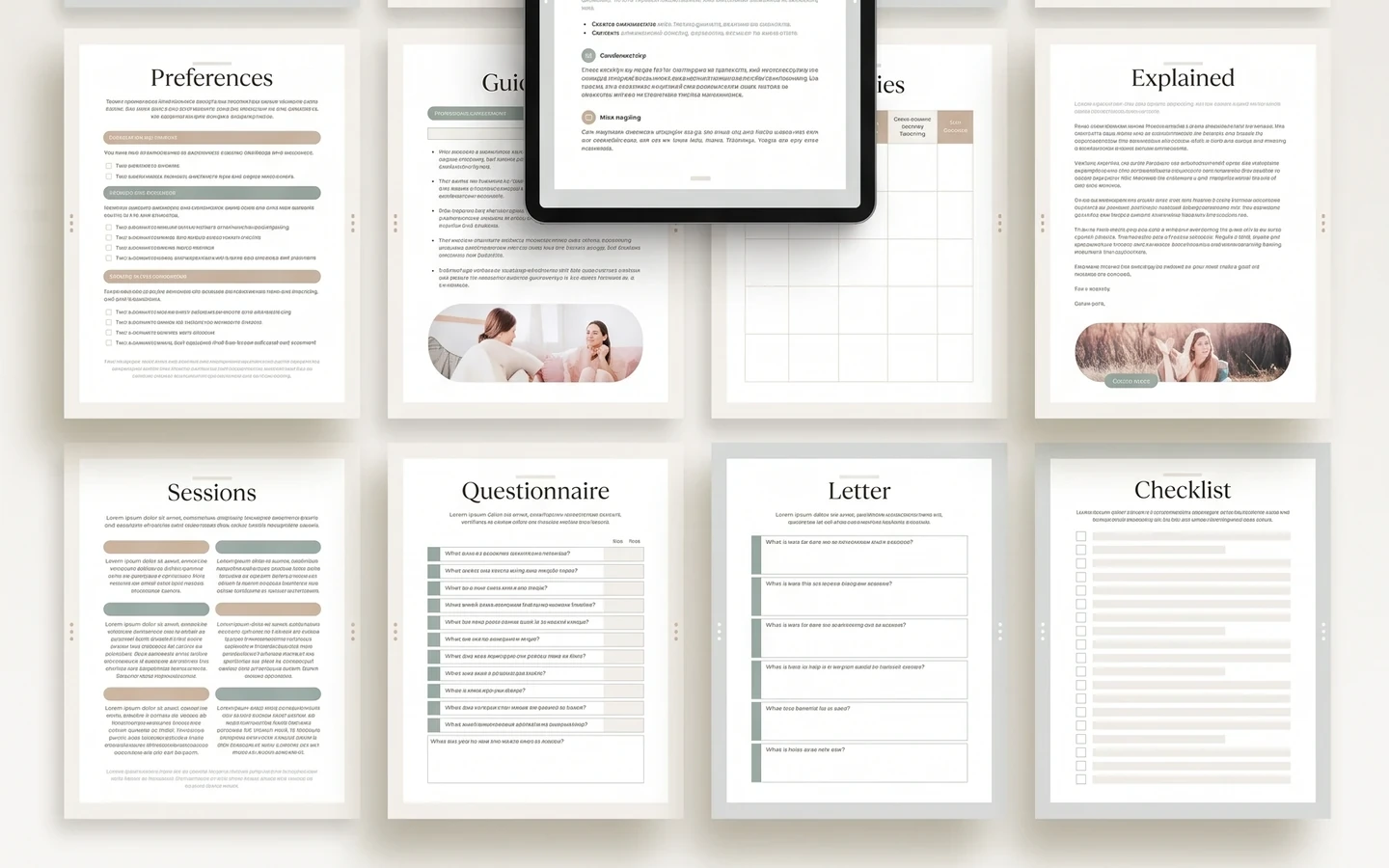
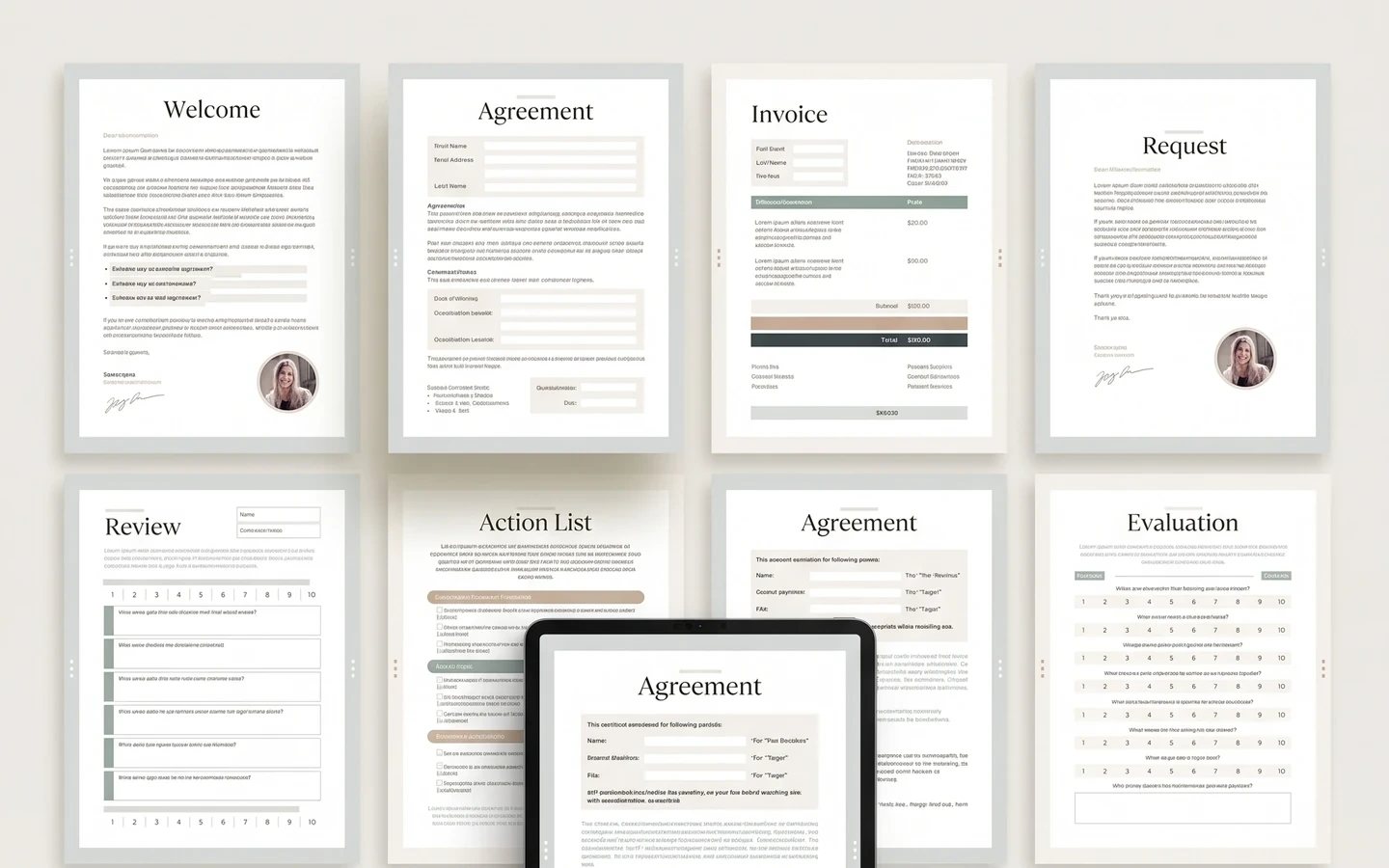
Make it look like you. A client sees your agreement, intake form, welcome packet and invoice within a week, and mismatched fonts and colors make the practice feel pieced together. Our stage-by-stage list of coaching forms shows where each one sits, and the guide to coaching templates shows the first 90 days.
Where the Life Coaching Kit Fits
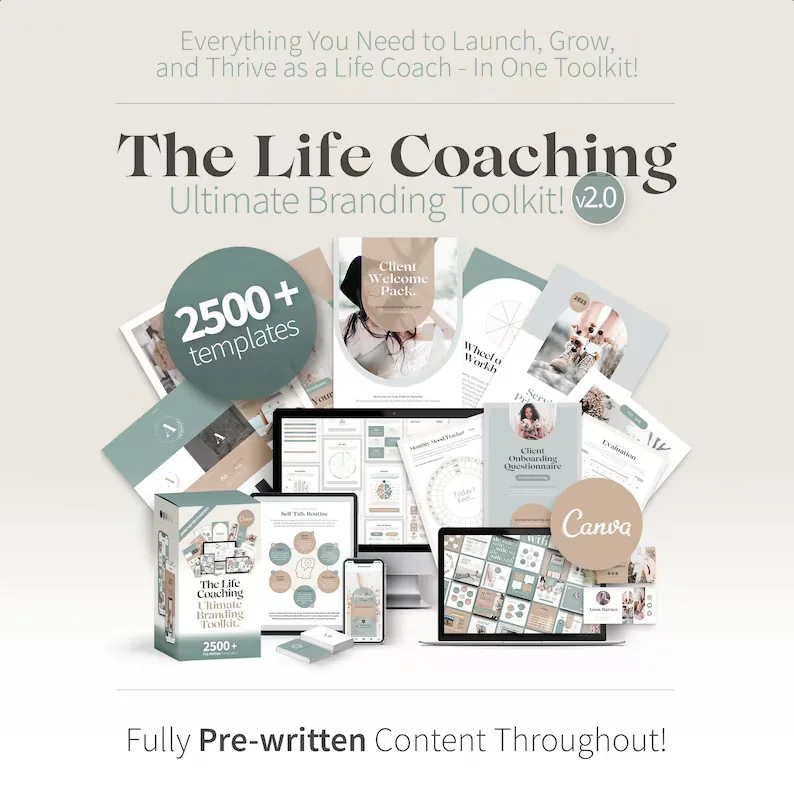
The Life Coaching Kit gives you the intake and onboarding pages in Canva, so you edit the 15 questions instead of designing the layout. Its contents include a client onboarding questionnaire and intake forms, in the same design as the agreement, welcome pack and offboarding pack. You add your wording, logo and colors.
What is in the kit for this step, from its contents page:
- Client onboarding: a client onboarding questionnaire, intake forms and a client welcome pack.
- Contractual forms: a coaching agreement to send together with the intake form.
- Offboarding: a client offboarding pack for the other end of the relationship.
- Editable in Canva: free or Pro, with your logo and colors.
It is not booking or client portal software, and the questions above are our own, not the kit's wording. If you later move to a coaching platform, you paste your own questions into its form. Have your documents reviewed where you practice.
How we put this together. We are the Cosmo Suite team that sells the Life Coaching Kit. Our methodology: the 15 questions, the cut list and the worked example are our own analysis of a solo practice, built on the ICF Code of Ethics. The two guides we read, and the ICF and ICO quotes, were checked on 5 October 2026. Read about us and the company behind this site and our editorial policy. None of this is legal advice.
See the client onboarding questionnaire and intake forms before you decide.
Frequently asked questions
How long should a life coaching intake form be?
Fifteen questions or fewer for most solo practices, which a client can finish in one sitting. Keep a question only if its answer would change how you run session one. If you add a niche section, such as career history for career-change clients, cut something else to make room.
When should I send the intake form to a client?
Right after the agreement is signed, and at least two days before session one. Luisa Zhou's coaching guide recommends allowing at least two business days. That gives the client time to answer properly and gives you time to read before the call.
Is an intake form the same as a discovery call questionnaire?
No. A discovery call decides whether you and the person work together. An intake form starts the work once they have said yes and signed. Two or three questions on a booking page are enough before the call, so the intake form can go deeper without repeating them.
Can I ask a life coaching client about their mental health?
Ask what you need to keep the work safe, and no more. A question like whether they are working with a therapist or another professional on this goal is usually enough. Do not ask for diagnoses or history. Coaching is not therapy, so refer out when a client's needs go beyond it.
How should I store life coaching intake forms?
One private folder per client, with a deletion date set before the form arrives. ICF Standard 2.4 asks coaches to keep records in a way that promotes confidentiality, security and privacy. Check the privacy and data protection rules where you and your client live.
What is the fastest way to get an intake form ready?
Start from a questionnaire that is already laid out, edit it to your 15 questions, and send it with your agreement. The Life Coaching Kit includes a client onboarding questionnaire and intake forms in Canva, editable with your logo and colors, so you only change the wording.
Sources
Keep reading
Client Paperwork
Life Coaching Forms: What to Have Ready Before Your First Client Session
Coaching forms for a solo life coach: 11 in client order, 10 the client sees, the 5 to have ready before session one, and which to fold in or skip.
· 11 min read
Client Paperwork
Free Coaching Agreement Template: 10 Clauses to Copy and Customize
Coaching agreement template in 10 clauses: what each one says, what it prevents and sample wording to adapt, plus the ICF ethics standards behind them.
· 9 min read

Client Paperwork
Coaching Session Notes Template: What to Write Down in 5 Minutes After Each Client Session
coaching session notes template: what to capture after each client session, what to leave out, and how to keep a one-page note useful in about five minutes.
· 7 min read