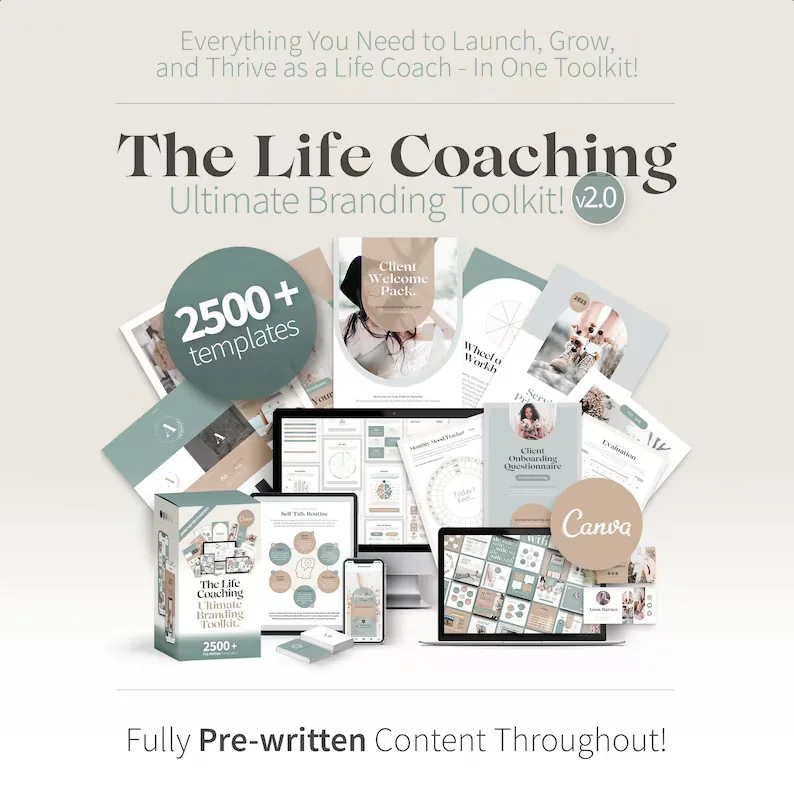
How to Plan a Life Coaching Session (Without Running Out of Time at Minute 50)
coaching session template: plan a client-led 60-minute life coaching session with a clear outcome, room to explore, and a simple close for each call.
By Life Coaching Kit by Cosmo Suite · Editorial policy
Published · 8 min read

Your client arrives ready to talk, and the first ten minutes disappear into updates. At minute 50, you remember the goal they named at the start. The close becomes a rushed question about what they will do next.
A coaching session template can give you a light frame for the hour without turning the conversation into a checklist. This one uses a simple 10 / 35 / 15 rhythm: agree on a focus, explore it, then make room to close. Treat those blocks as a starting point. The client’s needs and choices should shape the session.
Key takeaways:
- Agree with the client on what would make this session useful before exploring the topic.
- Use a 10 / 35 / 15 time sketch to protect space for both the conversation and the close.
- Keep a few prompts nearby, but let the client’s words guide what you ask.
A session plan should hold the time, not the client
A coaching session plan is a short set of cues that helps you manage time and return to the client’s chosen focus. It is not a script, a lesson plan, or a list of questions you must finish. Write down the topic the client brings, what they want from the hour, and the time you want to protect for the close.
The International Coaching Federation’s core competencies describe partnering with a client to establish an agreement for a session and to manage its time and focus. That is a useful test for any template: can you adjust it with the client, or does it pull you toward your own agenda?
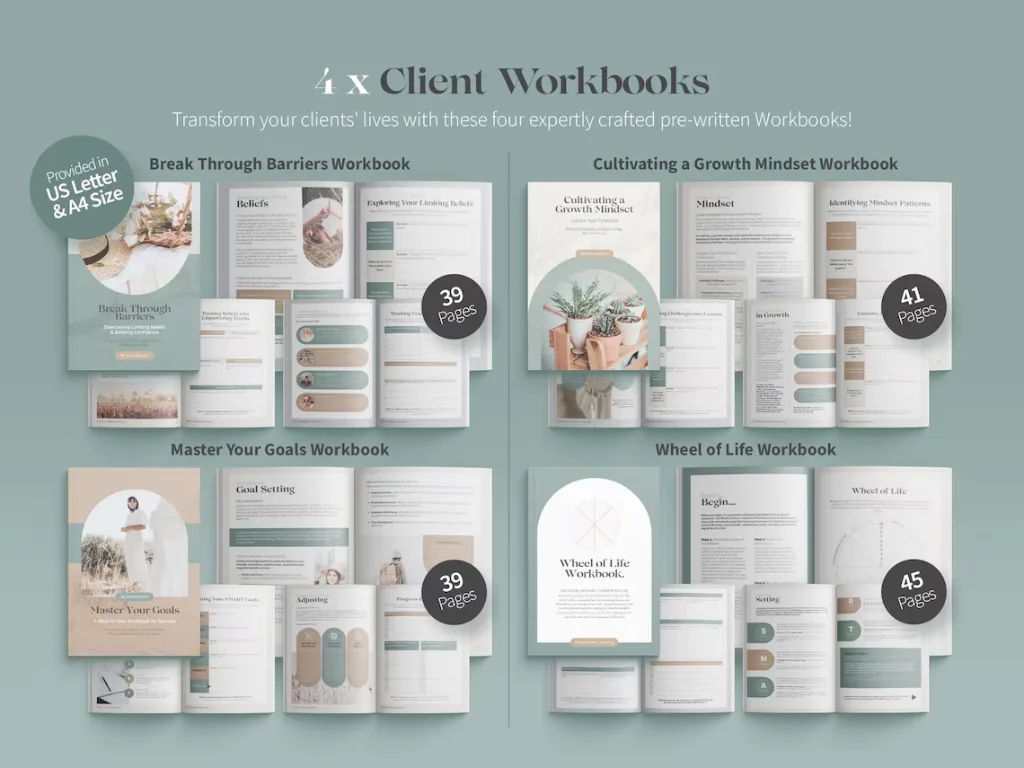
If you are still assembling forms and worksheets for your practice, editable life coach business templates can give you one place to start. The session itself still begins with the person in front of you.
Coaching session templates: what to use when
For a solo coach with a small client list, a one-page session plan is enough to keep the hour visible. A longer worksheet can help when the client wants to reflect between calls, while a loose conversation may suit a topic that needs more space.
| Format | What it holds | Use it when | Watch for |
|---|---|---|---|
| One-page session plan | Focus, time blocks, close | You want a quick cue sheet beside you | Filling every blank becomes the goal |
| Client reflection worksheet | Prompts the client completes | The client wants to prepare or reflect between calls | Homework feels required when it is not useful |
| Open conversation with a time check | One agreed outcome and a visible clock | The topic is new or emotionally complex | The close gets squeezed out |
| Multi-session program plan | Themes across several sessions | The client chose a longer goal or package | The plan becomes fixed before learning what the client needs |
Start with the one-page plan. Add a worksheet or a sequence only when it solves a real problem for that client. The coaching templates guide covers how the surrounding client documents fit together.
A 60-minute coaching session plan in three blocks
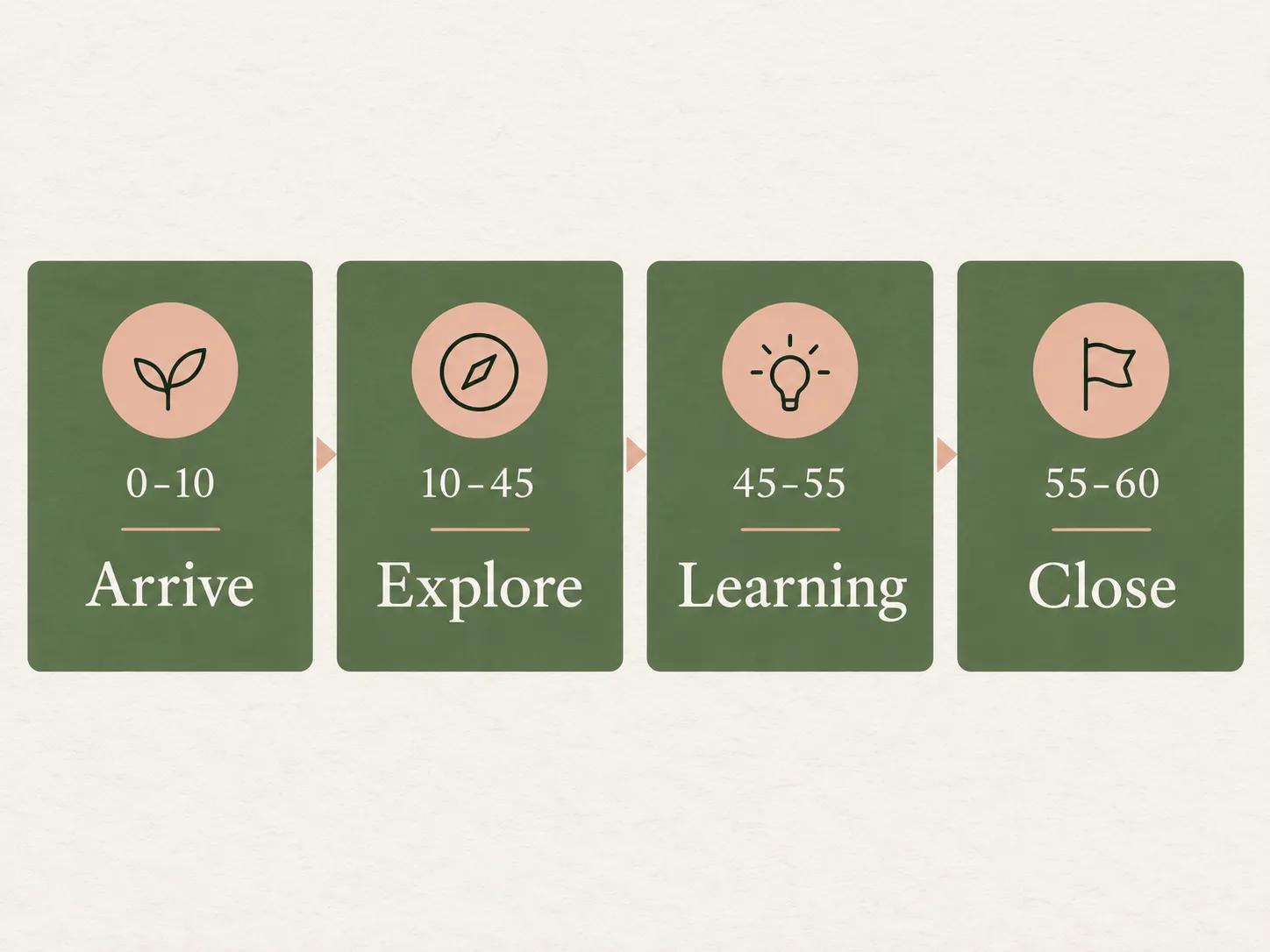
Try 10 minutes to arrive and agree on a focus, 35 minutes to explore, and 15 minutes to name learning and close. This is a worked example, not a recommended standard. If the client wants a different pace, discuss the change and keep enough time to end clearly.
| Minutes | Part of the session | One useful question | What to note on the plan |
|---|---|---|---|
| 0–10 | Arrive and agree | “What would make this conversation useful today?” | Client’s topic and chosen outcome |
| 10–45 | Explore | “What feels important about this now?” | Themes, shifts, or questions to revisit |
| 45–55 | Name learning | “What are you noticing that you did not see at the start?” | Client’s own words or insight |
| 55–60 | Close | “What, if anything, do you want to do next?” | Chosen action, no action, or follow-up |
The 10 / 35 / 15 summary combines the last two rows as one closing block. It keeps the plan easy to remember while leaving you room to check the time during the hour. Some conversations need a longer close; others reach a natural stopping point earlier.
The ICF’s ACC assessment criteria also describe agreeing on the client’s session outcome and attending to that agreement as the conversation unfolds. You do not need to force the client back to the opening topic. Check whether they want to change direction, then make the choice explicit together.
The ICF Code of Ethics describes coaching as a partnership and calls for clear agreements about roles and responsibilities. A written plan can support that conversation, but it does not replace it.
The ICF’s PCC assessment criteria also call for the coach and client to clarify what needs exploring to move toward the session outcome. That is why the middle block stays open: the client may need to explore something neither of you wrote on the page beforehand.
What to put on the session plan
Keep the page short enough to scan while you listen. Four sections can carry the hour: opening agreement, exploration cues, time check, and close. Leave blank space for the client’s own wording rather than pre-writing their answers.
Opening agreement: choose the destination together
Before the conversation gathers speed, ask what the client wants to leave with. “A decision” may mean choosing between two options, naming what is still unclear, or deciding what information to gather. Ask what would count as useful by the end of the hour.
Write the client’s desired outcome in a few words. If it changes later, update the plan. A change is not a failure to follow the template; the client may have learned what matters as they talked.
Exploration cues: stay curious without stacking questions
Add two or three prompts you can use if the conversation stalls. Keep them open and connected to the client’s topic. “What matters most about that?” may help more than a sequence of questions prepared before the call.
Avoid turning the page into a questionnaire. Ask one question, listen to the answer, and let the next question follow from what the client said. A pause can give them room to think. The plan should remind you to stay with the conversation, not make you rush to the next prompt.
Time check: name the choice before moving on
Choose a point near the middle of the hour to check whether the discussion is still useful. You might say, “We have about 20 minutes left. Do you want to stay with this, or shift toward what you want to do next?” This gives the client a choice and makes the remaining time visible.
If the client wants to keep exploring, agree on what will fit before the close. You may need to carry an unfinished question into the next session. Do not treat the original time blocks as a promise to resolve the topic.
Close: leave room for the client’s next thought
Use the final minutes to ask what the client is taking from the conversation and whether they want a next step. The answer may be an action, a question to consider, a request from you, or no commitment today. Record only what you both agreed to follow up on.
The coaching session notes template is for the short recap after the call. Keeping the plan separate from the note helps you tell preparation apart from what actually happened.
Worked example: a career-change conversation
Imagine a client has a session after receiving an internal job offer. They are unsure whether to apply. Here is one way the hour might be planned; it does not assume which option is right.
Use a time mark as a prompt, not a deadline. Ask whether the current focus still matches what the client wants. Give the client a chance to choose where the remaining time goes.
| Time | Plan cue | Possible client-led direction |
|---|---|---|
| 0–10 | Agree on a useful outcome | Decide what they want clearer by the end, not necessarily whether to apply |
| 10–25 | Explore what draws them to the role | Notice which parts reflect their own priorities and which come from others’ expectations |
| 25–40 | Look at concerns and unknowns | Separate what they know from what they still need to ask about |
| 40–50 | Check direction and time | Ask whether to continue exploring or make room for next steps |
| 50–60 | Close on the client’s terms | The client may choose to speak with the hiring manager, reflect, or take no action yet |
The plan gives you a way to notice time without deciding the client’s outcome. If a new concern becomes more important, ask whether they want to shift the focus. You can also name what will not fit today and let the client choose whether to return to it.
When the conversation changes direction
A client may bring an urgent topic, realize their first goal is no longer relevant, or ask for advice outside the coaching conversation. Pause before adjusting the plan. Ask what they want to focus on and whether the original outcome still matters.
If they choose a new direction, agree on the time available and what a useful close would look like. If they ask you to solve or advise, be clear about your role and any boundaries in your coaching agreement. A template cannot decide scope for you. It can remind you to check what the client is asking for and respond within your practice.
If the topic is outside your role or needs another kind of support, say so plainly and discuss an appropriate next step. Coaching and therapy are different services. Do not use a session plan to diagnose a client or promise a result.
Where Life Coaching Kit fits
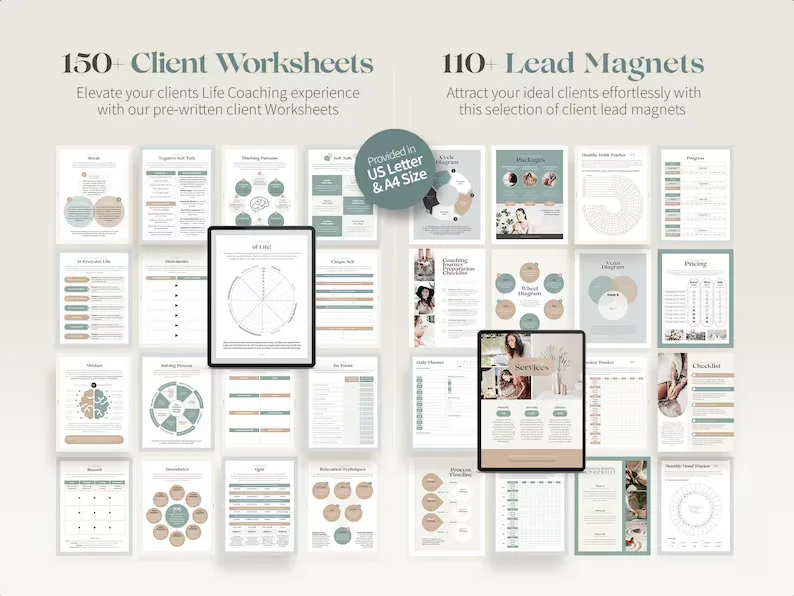
Life Coaching Kit includes customizable Canva templates for business branding, client forms and workbooks, social media, and lead magnets. Its coaching resources can help you prepare worksheets or other materials around a session. It does not provide booking, payment, or client portal software, and it does not decide what a client should work on.
Use the plan as a cue sheet you can edit for your practice. The client chooses the topic with you; the page helps you remember to agree on a useful outcome, check the time, and leave room to close. The Life Coaching Kit Canva templates are a starting point if you want editable materials in one visual style.
How we put this together: the session cues follow the published ICF competency language on creating a session agreement and managing focus and time. The 60-minute example is an illustrative planning exercise, not a claim about how every coach should work. Adapt it to your training, agreements, and client.
Frequently asked questions
What should a life coaching session include?
Start by agreeing on what the client wants from that conversation. Leave time to explore the topic, notice what is changing, choose a next step if one fits, and check what would make the session useful. The client sets the focus with you; the plan is a guide, not a script.
How do I structure a 60-minute coaching session?
One workable starting point is 10 minutes to arrive and agree on a focus, 35 minutes to explore it, and 15 minutes to name learning and next steps. Adjust the blocks when the client needs a different pace, and agree together before changing direction.
Should I send a coaching session plan to the client?
You can share a short outline if it helps the client know what to expect. Keep it flexible and invite them to choose the topic. A detailed agenda can make the conversation feel fixed before you have heard what matters today.
What is the difference between a session plan and coaching notes?
A session plan helps you hold the time and prompts before or during a conversation. Notes capture the focus, choices, and follow-up after it. Keep the two documents separate so preparation does not turn into a record of every detail.
How do I plan a coaching session when the client brings a new topic?
Pause and ask whether the new topic is what the client wants to work on now. If it is, agree what to set aside and what a useful outcome would look like. You can return to the earlier topic later if the client chooses.
Can I use a template for life coaching sessions?
Yes. Use the template to remember the opening, the time check, and the close. Leave the questions and direction open enough for the client to shape the conversation. Life Coaching Kit includes customizable Canva coaching resources and workbooks, but the coach and client still create the session together.
Sources
Keep reading
Client Paperwork
Coaching Session Notes Template: What to Write Down in 5 Minutes After Each Client Session
coaching session notes template: what to capture after each client session, what to leave out, and how to keep a one-page note useful in about five minutes.
· 7 min read
Client Paperwork
Life Coaching Forms: What to Have Ready Before Your First Client Session
Coaching forms for a solo life coach: 11 in client order, 10 the client sees, the 5 to have ready before session one, and which to fold in or skip.
· 11 min read
Client Paperwork
A Client Welcome Packet That Answers the First Questions Before Session 1
Client welcome packet: the 7 pages to include, the order clients ask their questions in, what to keep out, and a worked example of the first hour.
· 9 min read